

The iMPT

The iMPT

A scientific interest consortium (GIS) promoting mathematics and its role, together with other sciences, in addressing the major challenges facing planet Earth.

The institute of Mathematics
for Planet Earth

The institute of Mathema-tics for Planet Earth

The iMPT is a scientific interest consortium (GIS) established by the National Institute for Mathematical Sciences and their Interactions (INSMI) at the CNRS, in partnership with the Mathématiques Auvergne-Rhône-Alpes research federation.

4 missions

The iMPT promotes and coordinates the interactions of mathematics with other sciences, focusing on issues related to planet Earth and the interdependence of humans and their ecosystem.


Bring research communities together

The iMPT organises interdisciplinary meetings to connect mathematicians with researchers from other scientific fields, fostering collaboration and the exchange of ideas on shared challenges.

Fund interdisciplinary projects on mathematics

Fund inter-disciplinary projects

The iMPT supports research teams working on projects with significant scientific, societal and environmental impact, aiming to develop innovative interdisciplinary solutions to shared issues.

Accelerate the transfer of knowledge

The iMPT organises research schools and provides course materials and training lists to encourage the transfer of knowledge and the sharing of tools and methods between disciplines.

Disseminate science to the general public

The iMPT compiles accessible resources and takes part in events aimed at the general public to raise awareness of the major challenges addressed by mathematical research for planet Earth.

0
partner institutions as of 1 July 2025
0
CNRS institutes involved: INSMI, INEE, INP, INSU
0
research projects funded since 2021
0M€
allocated to research projects since 2021

3 main
research lines

To tackle the major mathematical challenges facing planet Earth, the iMPT organises its activities around three main research lines.

Living planet

  • Ecosystem complexity

  • Population adaptation

  • Invasive species
  • Zoonoses and epidemiological risks

  • Ecosystem services

  • Plant growth

  • Agriculture, fisheries and biodiversity

  • Regional dynamics and resilience

  • Cellular ecology

  • Human and global health

Fluid solid planet

  • Climate and climate change

  • Energy exchange and turbulence

  • Oceans and atmosphere

  • Land-ocean coupling

  • Glacier dynamics

  • Operational hydrology

  • Underground resource management

  • Underground modelling

  • Seismic and volcanic activity

  • Natural disasters

Human planet

  • Renewable energies

  • Sustainable resource management

  • Urban planning and mobility

  • Pollution and waste

  • One health policies

  • Adaptation to climate change

  • Natural risk management

  • Evolution of human behaviour

  • Complex networks

  • Data security

MathsInTerre

MathsIn Terre

The iMPT’s priority topics and research lines stem from the forward-looking workshop MathsInTerre. They continue to evolve thanks to the expertise and guidance of the institute’s scientific committee.

Key dates

The iMPT emerged from a reflection process that began in 2013, the year declared the International Year of Mathematics of Planet Earth.

Executive Board

The iMPT is led by a team of eight scientists whose expertise lies at the intersection of mathematics and Earth sciences.


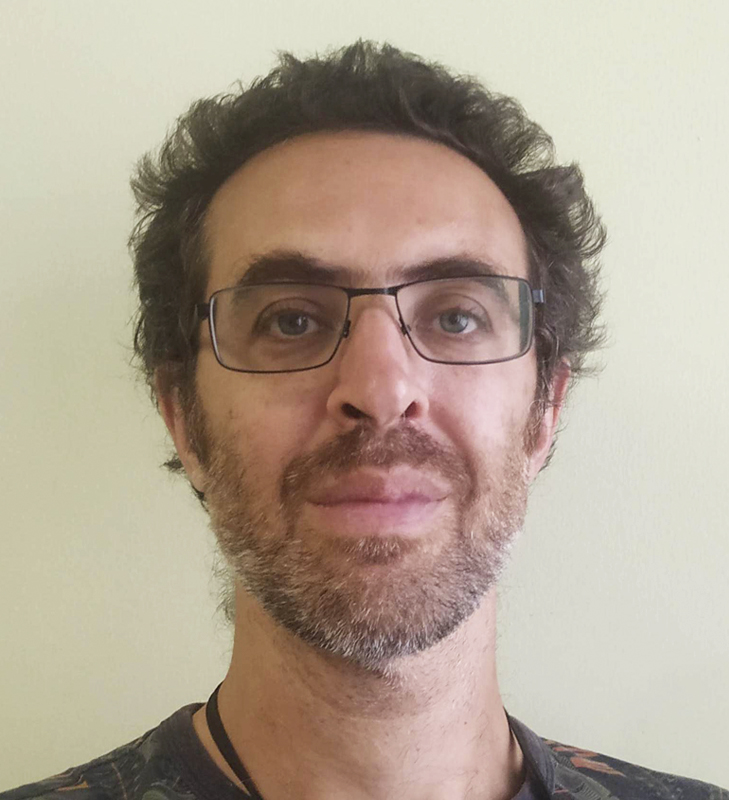
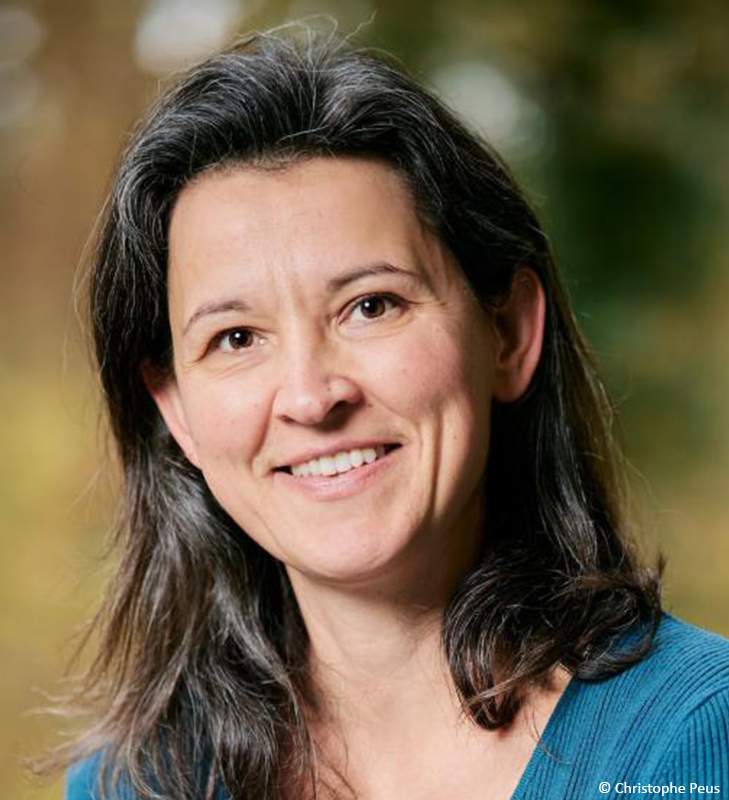
Amandine Véber
Amandine VéberMathematician
CNRS Research Director at Université Paris Cité and Director of the iMPT
Arnaud Guillin
Arnaud GuillinMathematician
Professor at Université Clermont-Auvergne and Executive Director of the iMPT
Luis-Miguel Chevin
Luis-Miguel ChevinEvolutionary biologist
CNRS Research Director in Montpellier
Aline Lefèbvre-Lepot
Aline Lefèbvre-LepotMathematician
CNRS Research Director at ENS Paris-Saclay
Aude Pommeret
Aude PommeretEconomist
Professor at Université Savoie-Mont-Blanc
Julie Deshayes
Julie DeshayesOceanographer
CNRS Research Director at IPSL
Jean-Noël Thépaut
Jean-Noël ThépautMeteorologist
Consultant for the ECMWF and the WMO
Antoine Venaille
Antoine VenaillePhysicist
CNRS Research Director at ENS Lyon

The Executive Board and the Scientific Committee are composed of 40% mathematicians and 60% specialists from other disciplines related to Earth, life and human sciences.

Scientific Comittee

The Executive Board draws on the expertise of the Scientific Committee, which is made up of specialists working in the fields covered by the iMPT.

Partners’ Comittee

The Partners’ Committee brings together ten members representing the iMPT’s ten partner institutions.


A strong national presence

The iMPT originated within the Mathématiques Auvergne-Rhône-Alpes research federation, the third-largest mathematics federation in France. Building on this strong regional foundation, the institute seeks to expand its activities and strengthen its network across the country.

A strong national presence

The iMPT originated within the Mathématiques Auvergne-Rhône-Alpes research federation, the third-largest mathematics federation in France. Building on this strong regional foundation, the institute seeks to expand its activities and strengthen its network across the country.

Ressources
de l’iMPT

Ressources de l’iMPT